


Addressing Pain Points in US Home Services with Voice AI and Automation
Voice AI and automation are redefining how services are requested, scheduled, and delivered.
12th October, 2025 Jay Paszamant
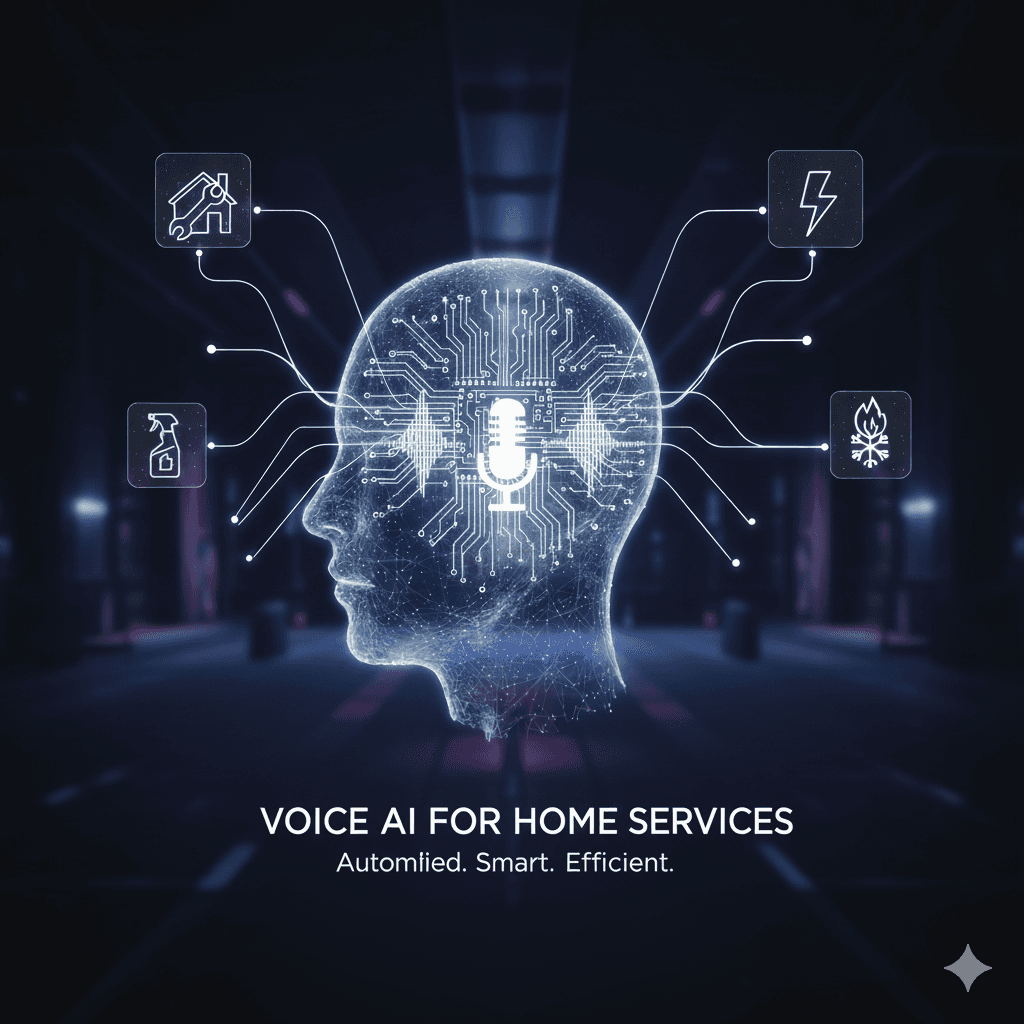
The U.S. home services industry has seen a surge in missed appointments and scheduling errors, compounded by labor shortages. Voice AI and automation are being deployed to refine processes, not replace workers, and are redefining service requests, scheduling, and delivery. Companies are using voice-activated systems to process natural language requests, reducing scheduling latency, and embedding predictive analytics to anticipate customer needs.
Scope, Challenges, and Solutions
Integrating Voice AI with legacy systems like dispatch and CRM is a key challenge. Voice AI acts as middleware, translating natural language into actionable data to eliminate bottlenecks and reduce scheduling errors. Implementation complexities include handling regional dialects and background noise. Balancing technical precision with user-centric design is crucial for success. Voice AI serves as adaptive middleware, interpreting natural language inputs dynamically. Advanced NLP models are trained on diverse datasets to handle regional accents. Iterative learning maintains operational reliability. Service providers can optimize workflows and improve customer satisfaction by viewing Voice AI as an augmentation.
Operational Efficiency and Streamlining
Legacy systems cause fragmented workflows, leading to downtime and revenue loss. Voice AI, combined with dynamic scheduling algorithms, automates real-time decision-making. Adaptive systems flag anomalies for human review. Dynamic scheduling and dispatch systems use NLP, predictive analytics, and real-time data integration for real-time resource allocation. AI-driven systems adapt dynamically, matching technician expertise with job requirements.
Customer Communication and Workforce Management
Voice AI, integrated with intelligent IVR systems, enables seamless, conversational interactions and reduces response times. AI-powered IVR adapts to user behavior, offering personalized suggestions. Voice AI and automation address labor shortages by automating routine tasks, requiring training programs that align human expertise with AI capabilities. Automation serves as an augmentation tool, with human oversight ensuring flexibility. Context-aware task prioritization systems use predictive analytics and contextual data inputs to optimize workforce allocation. Effective workforce training involves iterative simulation drills and hands-free training, with feedback loops informing AI model refinements.
Market Differentiation and Personalization
Leveraging Voice AI builds trust through transparency and personalization. Voice AI systems provide instant, data-driven updates, increasing repeat bookings. Personalization amplifies trust by predicting customer needs. Voice AI ensures customers stay informed through proactive, real-time communication. Adaptive models account for contextual variables, reducing complaint rates. Personalized customer experiences rely on real-time contextual adaptation using predictive algorithms, integrating NLP with CRM systems. Dynamic AI systems enhance customer experience, increasing upsell conversions.
Advanced Applications and Predictive Maintenance
Voice AI is transitioning to predictive orchestration, integrating with IoT-enabled smart sensors. Adaptive voice platforms refine algorithms through live contextual learning, improving response times. Predictive maintenance integrates IoT sensor data with advanced analytics, enabling real-time anomaly detection and efficient resource allocation. Predictive systems adapt dynamically to real-time conditions, reducing maintenance costs. Context-aware adaptive learning systems adjust behavior based on real-time environmental and user-specific data.
FAQ Summary
Voice AI automates appointment management to address scheduling inefficiencies. Automation mitigates labor shortages by streamlining repetitive tasks and dynamically allocating resources. Predictive analytics enhances customer satisfaction by anticipating service needs. Key integration challenges include data silos and limited interoperability with legacy systems. Voice AI improves operational efficiency by automating routine tasks while maintaining a human-centric approach.